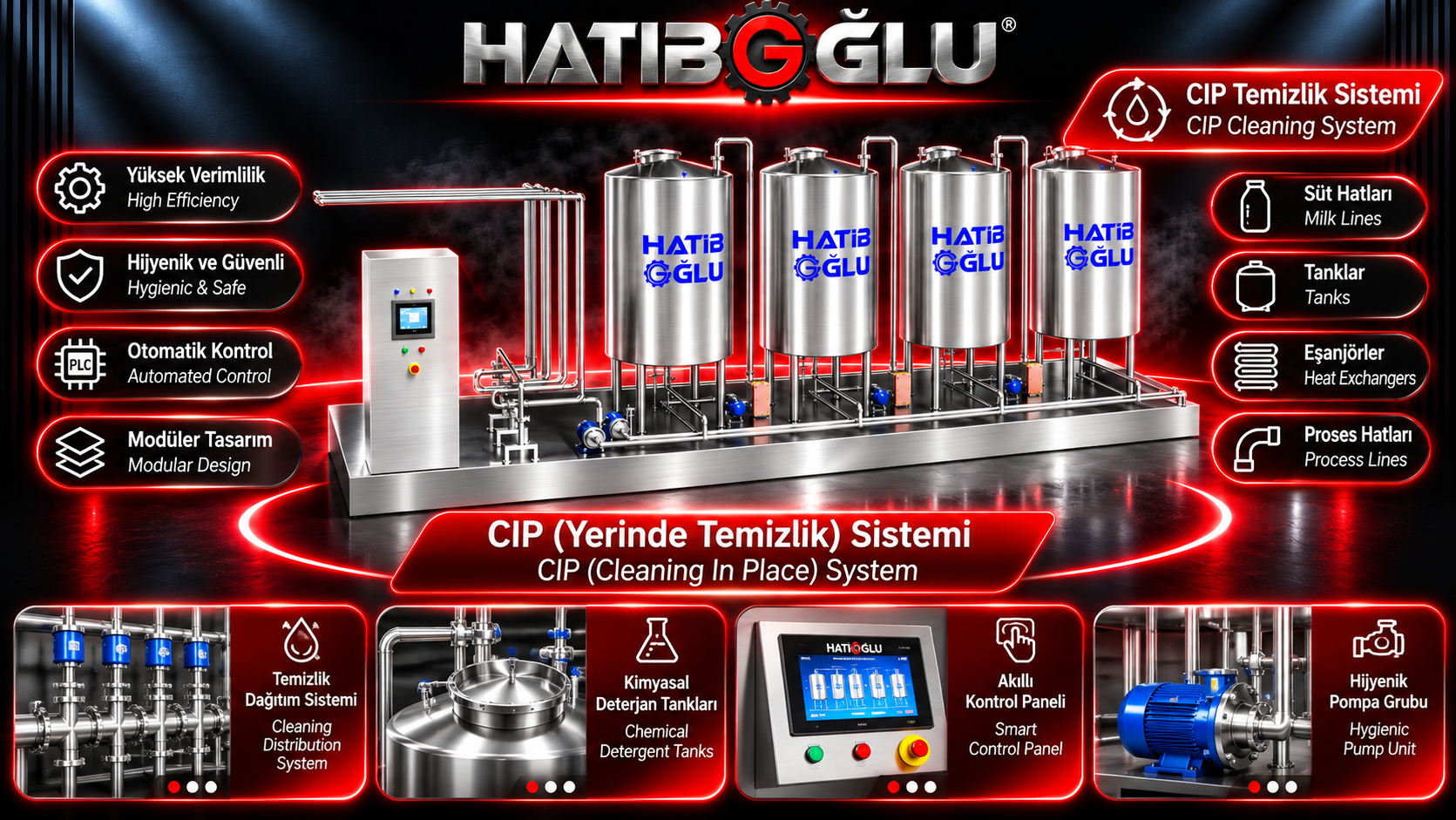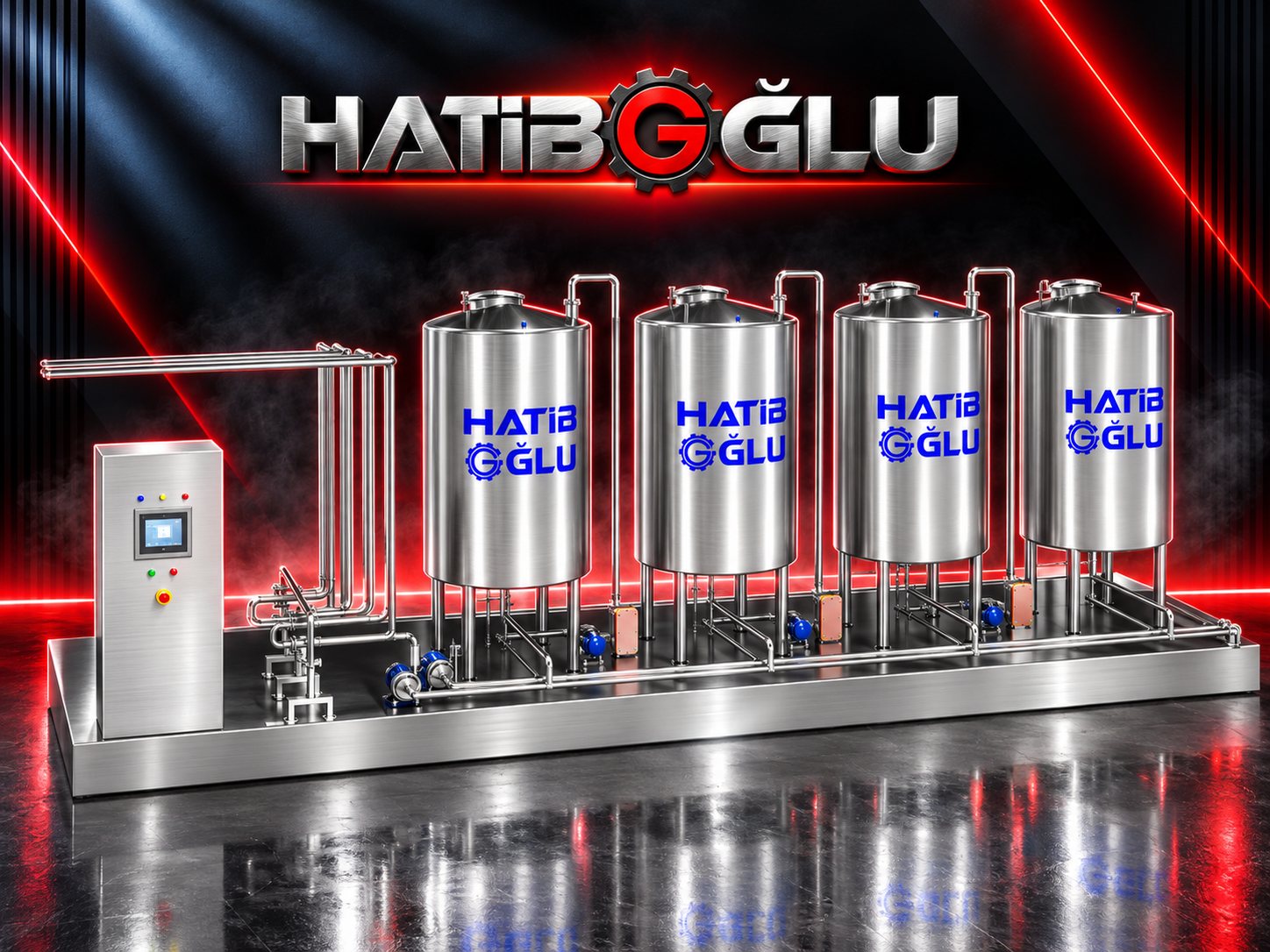
Clean In Place CIP Automatic Cleaning System
The system is manufactured from high quality AISI 316/316L stainless steel
Three or four tanks depending on customer requirements
Two dedicated balance tanks for caustic soda and acid solutions
Caustic solution tank
Acid solution tank
Hot water tank
Sterilized water tank
Control panel equipped with a PLC touchscreen for fully automatic operation and complete system control
Dedicated circulation pump for the cleaning process
Heat exchanger
PT100 temperature sensors
Product inlet and outlet connections according to the required piping connections and accessories
Vertical access manhole with a diameter of 500 mm
The complete system is mounted on a platform manufactured from high quality AISI 316L stainless steel
Internal tank capacity is determined according to the production capacity and specific requirements of the factory
The Importance of an Automatic CIP Cleaning System
A Scientific Study on Effective Temperatures Chemicals and Cleaning Solutions Used in Clean In Place CIP and Clean Out of Place COP Systems in Food and Beverage Factories in Accordance with the Latest International Practices
Clean In Place CIP and Clean Out of Place COP systems are among the fundamental pillars of food safety and product quality assurance in food and beverage manufacturing facilities
Their role is not limited to removing product residues but also extends to preventing biofilm formation reducing microbial loads maintaining equipment efficiency and extending operational service life These systems help ensure stable production processes and compliance with international regulations and standards including Codex Alimentarius FDA EHEDG 3 A Sanitary Standards ISO 22000 and FSSC 22000
Despite significant advances in automated cleaning system design and the use of sophisticated software to control cleaning cycles temperature remains one of the most widely debated and misunderstood factors in food manufacturing facilities
In many cases operating temperatures are selected based on practical experience or traditional practices without referring to the scientific principles that determine the optimum temperature for each chemical agent and each type of contaminant
One of the most common misconceptions is that increasing the temperature always improves cleaning efficiency However recent studies have demonstrated that exceeding optimum temperature limits can produce adverse effects such as protein denaturation and fixation onto metal surfaces increased mineral scale deposition accelerated corrosion of certain system components and higher energy and chemical consumption without achieving any actual improvement in cleaning performance
There is also considerable confusion between several similar but technically distinct concepts including the temperature of the cleaning solution inside the CIP tank the temperature of the cleaning solution at the equipment inlet the temperature of the cleaning solution upon its return Return Temperature the temperature of the equipment surface during cleaning the temperature of the water used for pre rinsing intermediate rinsing and final rinsing thermal sterilization temperature and chemical sanitization temperature
Each stage of the cleaning cycle has a different objective and specific operational requirements Therefore a single temperature cannot be applied to all stages or all chemical cleaning agents
The importance of this subject is increasing in light of global efforts to improve energy and water efficiency and reduce carbon footprints Modern CIP programs are increasingly designed to achieve maximum cleaning efficiency while minimizing resource consumption
This requires the precise selection of appropriate operating temperatures rather than relying on the assumption that higher temperatures always result in better cleaning
The effectiveness of any cleaning program is based on four fundamental elements known in scientific literature as Sinners Circle
Thermal Energy Temperature which refers to the temperature of the cleaning solution
Chemical Action which refers to the effectiveness and concentration of the cleaning chemicals
Mechanical Action which refers to the physical force and flow dynamics of the cleaning solution
Contact Time which refers to the duration of contact between the cleaning solution and the surfaces being cleaned
Achieving the correct balance between these four elements is the true foundation of successful cleaning operations A reduction in one element can be compensated for by increasing another within scientifically established limits without compromising equipment safety or product quality
Objectives of This Study
This study aims to provide a comprehensive scientific and engineering review of the temperatures used in CIP and COP systems in food and beverage manufacturing facilities
It focuses on analyzing the effect of temperature on the cleaning efficiency of different types of contaminants identifying the optimum temperature ranges for each chemical cleaning agent establishing appropriate water temperatures for the various rinsing stages reviewing common operational errors and their impact on cleaning performance and presenting the latest international best practices adopted by relevant regulatory and standardization bodies as well as leading manufacturers of cleaning equipment and industrial cleaning systems
The ultimate objective is to improve cleaning efficiency ensure food safety protect equipment optimize water and energy consumption and achieve reliable and sustainable industrial cleaning processes