Homogenizer
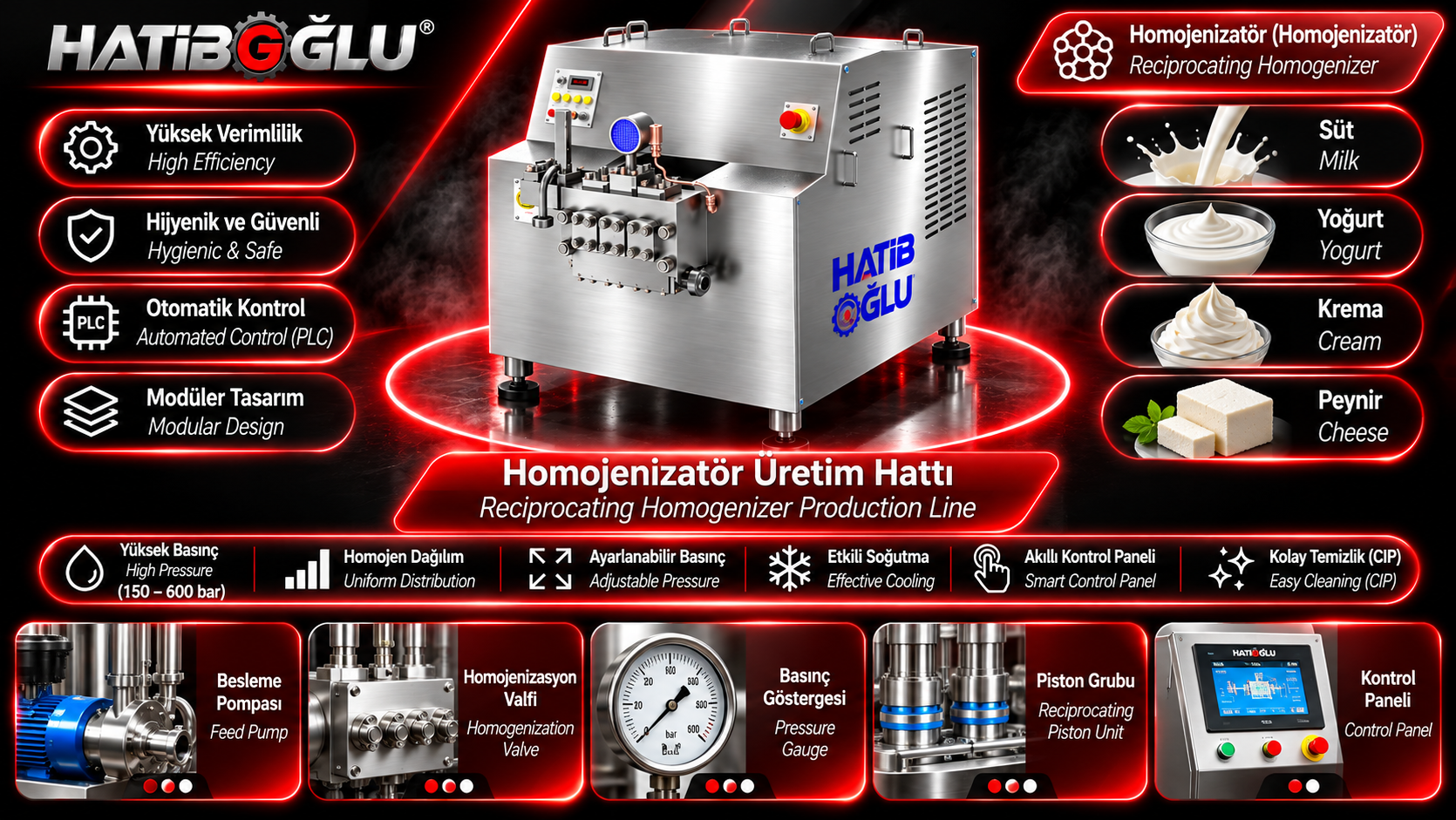
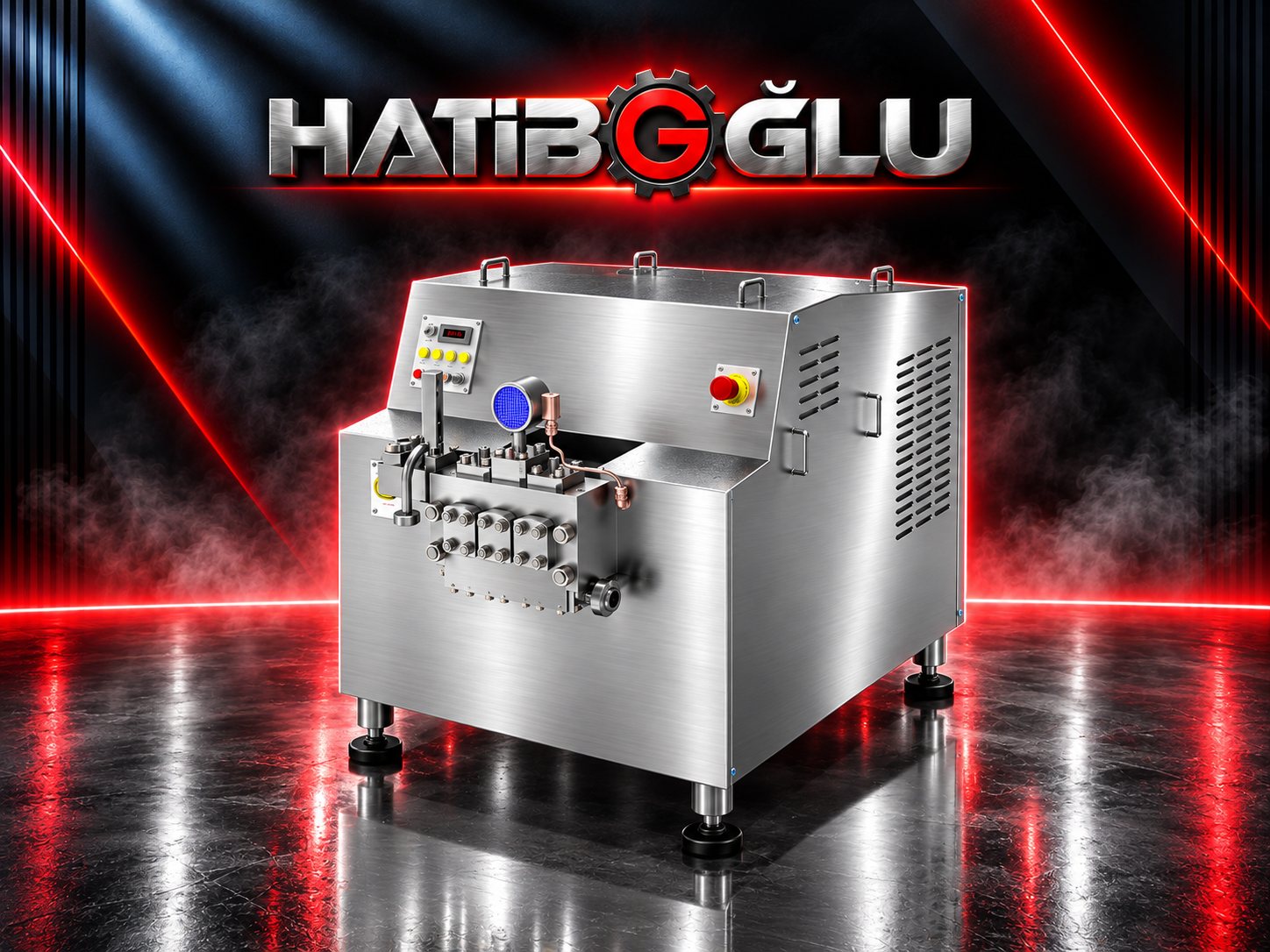
The reciprocating homogenizer is one of the most important industrial machines used in food processing plants, dairy factories and milk product manufacturing facilities. It is used to process liquid and semi-liquid products by applying high mechanical pressure to the product and forcing it through a precision homogenizing valve This process reduces the size of fat globules and particles and distributes them uniformly throughout the product
The reciprocating homogenizer operates through a mechanical system consisting of an electric motor a transmission system a crankshaft and reciprocating pistons that move back and forth in a sequential motion These pistons draw in the product, compress it and push it towards the homogenization stage under high pressure, which is adjusted according to the nature of the product and the processing requirements
The homogenizer helps improve the physical structure of the product, increase its stability and reduce fat separation or the sedimentation of certain components It also helps achieve a smooth and homogeneous texture a consistent appearance and stable quality in the final product
The reciprocating homogenizer is widely used in the production of milk, yogurt, ayran, cream clotted cream, ice cream flavored milk, condensed milk and cheese products. It is also used in the production of juices, sauces, ketchup mayonnaise and many other food products and industrial applications
Working Principle of the Reciprocating Homogenizer
The reciprocating homogenizer operates based on the principle of high pressure and the reciprocating movement of pistons The rotational movement of the electric motor is converted into reciprocating movement through a crankshaft and connecting rod system This allows the pistons to draw in the product compress it and continuously push it towards the homogenizing valve
The homogenization process consists of the following stages
Product Inlet Stage
Milk or the food product enters the pressure head of the homogenizer through the feed line and is directed into the pressure cylinders through dedicated suction valves.
Pressurization by Pistons
The reciprocating pistons move sequentially inside the cylinders, drawing in the product, compressing it and pushing it under high and continuous pressure towards the homogenizing valve.
First Homogenization Stage
The pressurized product passes through a very narrow opening between the homogenizing valve and the valve seat. This increases the flow velocity of the product and generates shear forces, turbulence and cavitation effects, which help break down large fat globules into smaller ones
Second Homogenization Stage
In machines equipped with a two-stage homogenization system the product passes from the first stage to the second homogenizing valve This stage helps break down particle aggregates improve the distribution of components and achieve more stable homogenization
Product Outlet Stage
After the homogenization process is completed, the product leaves the machine with a more uniform structure and better distribution of fats and other components It then moves to the next stage of the production line, such as pasteurization, cooling, storage or filling, depending on the production line design
The homogenization process depends on several simultaneous physical effects, including shear forces, turbulence impact and cavitation The final result varies according to the operating pressure product temperature product composition and type of homogenizing valve
Main Components of the Reciprocating Homogenizer
The reciprocating homogenizer consists of a group of mechanical, hydraulic and electrical systems designed to operate under high pressure
Main Electric Motor
Provides the energy required to operate the machine and drive the transmission system
Gearbox and Transmission System
Transfers motion from the motor to the crankshaft according to the required speed and torque
Crankshaft
Converts rotational movement into reciprocating movement of the pistons
Connecting Rods
Transfer movement from the crankshaft to the pistons and ensure regular compression and suction movements
Reciprocating Pistons
Draw in the product, compress it and deliver it to the homogenizing valves under high pressure
Pressure Head
Contains the pressure cylinders, product inlet and outlet passages, suction valves and discharge valves
Homogenizing Valves
These are the main components responsible for the homogenization process. The product passes through a very narrow opening that is adjusted to achieve the required homogenization pressure
Pressure Adjustment System
Allows the homogenization pressure to be controlled according to the product type and the desired result
Safety Valve
Protects the machine and production lines against pressure exceeding the permitted limits
Cooling and Lubrication System
Maintains suitable operating temperatures, lubricates the mechanical components and protects the parts against wear
Electrical Control Panel
Allows the machine to be operated and, depending on the installed equipment enables monitoring of pressure temperature operating status and protection systems
Types of Homogenization Systems
Single-Stage Homogenizer
Contains one homogenizing valve and is used in applications requiring a level of homogenization suitable for the nature of the product
Two-Stage Homogenizer
Contains two sequential homogenizing valves. The second stage helps reduce particle aggregates and improve the stability of component distribution.
The homogenization system is selected according to the product type, fat content, viscosity, required pressure and final product characteristics.
Applications of the Reciprocating Homogenizer in the Food Industry
The reciprocating homogenizer is used in a wide range of food industry applications. The main applications include
Fresh milk and pasteurized milk production
Sterilized milk production
Flavored milk production
Yogurt production
Ayran and dairy beverage production
Cream and clotted cream production
Condensed milk production
Ice cream production
Cheese mixtures and certain cheese products
Fruit juice and nectar production
Sauce production
Ketchup production
Mayonnaise production
Food emulsion production
Plant-based beverage production
Pharmaceutical and medical preparation industries
Chemical industries requiring emulsion homogenization
Main Benefits of Using a Reciprocating Homogenizer in Dairy Factories
The use of a reciprocating homogenizer provides several industrial benefits and improves the quality of food products
Reduces the size of fat globules and distributes them uniformly
Helps limit the formation of a cream layer and fat separation from milk
Improves product stability during storage
Provides a smooth and homogeneous texture
Improves the appearance, color and mouthfeel of the product
Improves the stability of food emulsions
Reduces the aggregation of particles and fats
Improves the uniform distribution of components throughout the product
Allows a wide range of products to be processed using one machine when equipped appropriately
From a technical perspective, milk homogenization reduces the average size of fat globules from approximately 3.5 micrometers to less than one micrometer under suitable homogenization conditions, which helps reduce cream separation
Technical Specifications of the Reciprocating Homogenizer
The technical specifications of the reciprocating homogenizer vary according to production capacity required pressure product type and installed equipment
Machine type High-pressure reciprocating homogenizer
Operating system Reciprocating pistons
Manufacturing material High-quality stainless steel
Pressure components Manufactured from wear-resistant materials according to the design
Homogenization pressure: Up to 250 bar, depending on the model
Number of stages Single-stage or two-stage
Power source Electric motor
Control system Electrical control panel or automatic control system
Protection system Adjustable safety valve
Auxiliary circuits: 220 V, depending on the design
Feed water pressure Minimum 2 bar depending on the design
Air pressure: According to the requirements of the installed equipment
Cooling system According to machine capacity
Clean-in-Place system (CIP): According to the machine design
Technical note: A pressure of 250 bar is a specification for the particular model and is not a suitable pressure for all products. In two-stage machines, the pressure of each stage must also be determined separately
Integration of the Homogenizer into Production Lines
The reciprocating homogenizer can be integrated into various food production lines. Its installation position depends on the nature of the product, the required temperature and the heat treatment system
In pasteurized milk production lines, the homogenizer can be installed within the thermal pasteurization system according to the sequence of stages specified in the production line design
In sterilized milk production lines, it can be integrated with suitable thermal processing and sterilization systems
It can also be used in cream ice cream condensed milk and various dairy product production lines, with the appropriate pressure and temperature selected for each product
Cleaning and Maintenance
The reciprocating homogenizer requires a regular maintenance program to maintain operating efficiency ensure pressure stability and extend the service life of its components
Maintenance procedures include
Regularly checking the lubrication oil level
Monitoring the temperature of mechanical components
Inspecting the pistons and pressure seals
Inspecting the suction and discharge valves
Inspecting the homogenizing valves and valve seats
Ensuring the safety valve is in good working condition
Inspecting high-pressure connections and pipes
Performing internal cleaning according to the Clean-in-Place system and the approved machine design
The manufacturers instructions must be followed. No part of the pressure circuit should be dismantled before releasing the pressure and confirming that the machine is safe
Why Choose Ibn Al-Khatib Homogenizers
Ibn Al-Khatib Food Machinery Manufacturing Company provides specialized industrial solutions for the design manufacturing and supply of high-pressure reciprocating homogenizers to meet the requirements of dairy factories and food processing industries
We provide homogenizers with different specifications according to the required production capacity homogenization pressure, product type and intended application. Depending on project requirements machines can be equipped with single stage or two stage homogenization systems and electrical or automatic control systems
Our services include
Design and manufacturing of reciprocating homogenizers
Determining the appropriate production capacity for each project
Equipping machines with single-stage and two stage homogenization systems
Equipping machines with pressure adjustment systems
Manufacturing and installation of auxiliary systems
Integrating homogenizers with pasteurization and production lines
Installation commissioning and testing
Technical training and after-sales services
High-level homogenization of milk and other products and reduction of fat globule size
Improving product stability and preventing fat separation during storage
Improving the texture and viscosity of milk yogurt, ayran, cream and other products
Obtaining a smooth and homogeneous product in terms of structure and appearance
Helping distribute fats and components evenly throughout the product
Adjusting the homogenization pressure according to the product type and processing requirements
Hygienic design with product contact parts made of food-grade AISI 304 or AISI 316 stainless steel
Reducing fat accumulation on the surface of milk and improving product stability